
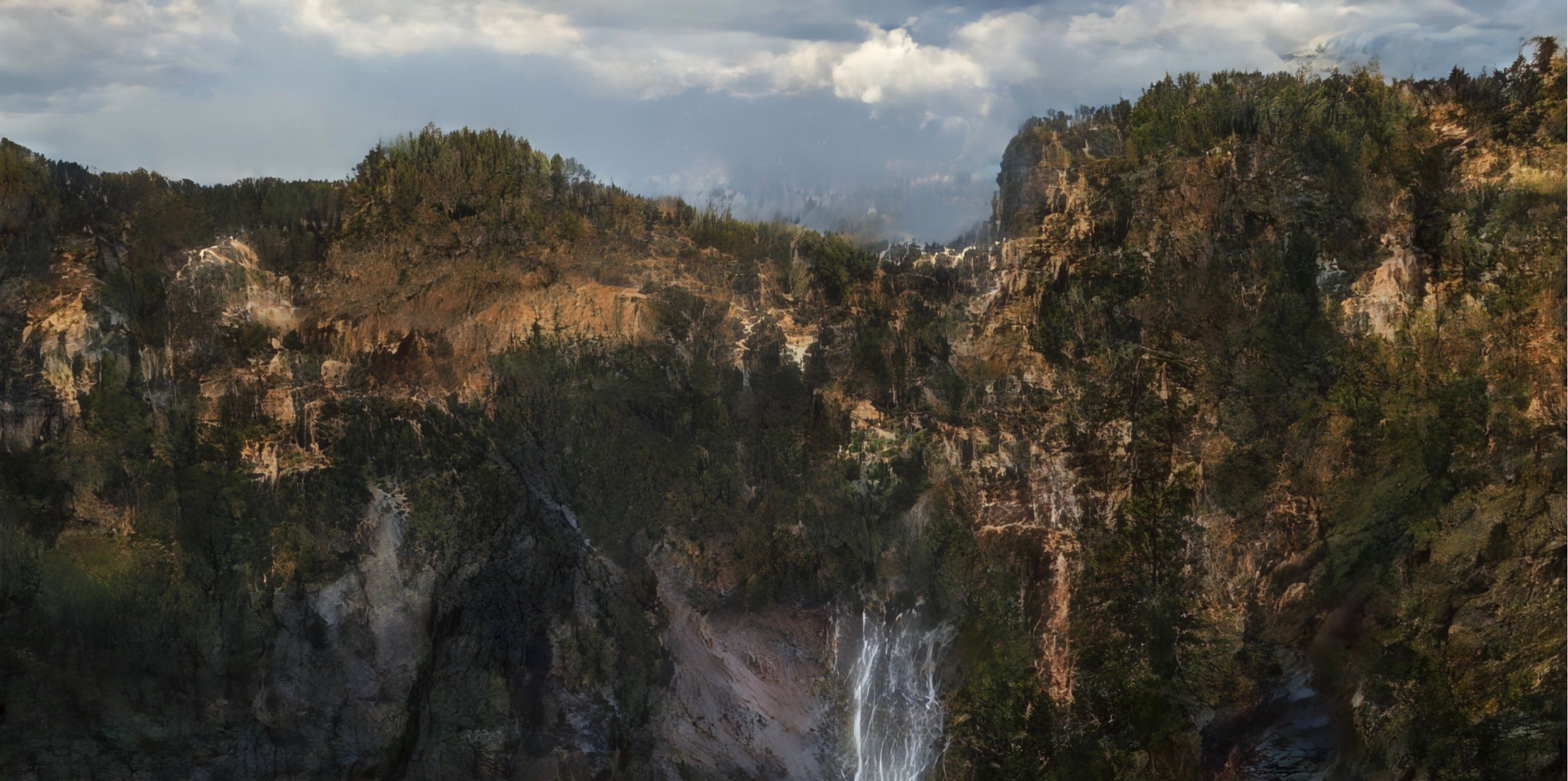
Ultra-High-Resolution Image Synthesis with Pyramid Diffusion Model
Achieves high-resolution image synthesis up to 2K resolution by utilizing a pyramid latent representation and various enhancements to neural network components.
Pyramid Diffusion Model (PDM) is a recent technical advancement marking a significant stride in high-resolution image synthesis. Unlike conventional methods, PDM introduces a novel pyramid latent representation, broadening the design space and enabling more flexible, structured, and efficient perceptual compression. This breakthrough facilitates the synthesis of images with resolutions up to 2K, a milestone achievement demonstrated on two newly curated datasets comprising images of sizes 2048x2048 pixels and 2048x1024 pixels.
PDM's architecture offers a web of enhancements to the neural network components, aimed at bolstering image generation capabilities. Modifications include the integration of Spatial-Channel Attention and Res-Skip Connection, alongside the utilization of Spectral Norm and Decreasing Dropout Strategy for the Diffusion Network and AutoEncoder.
The incorporation of skip connections and residual networks play pivotal roles in improving generative methods. By combining output skips in the Generator with residual nets in the Discriminator, PDM achieves remarkable results across datasets like FFHQ and LSUN Car, showcasing the versatility and efficacy of its design.
Comments
None